Compact
Cut log analytics and storage costs by over 50% by losslessly compacting log/trace events at the edge before shipping them to output. Compact mode is one of the Reducer's two execution modes (the other is Filter). Events ship as a compact wire-form that downstream SIEM plugins or Retriever expand at query time.
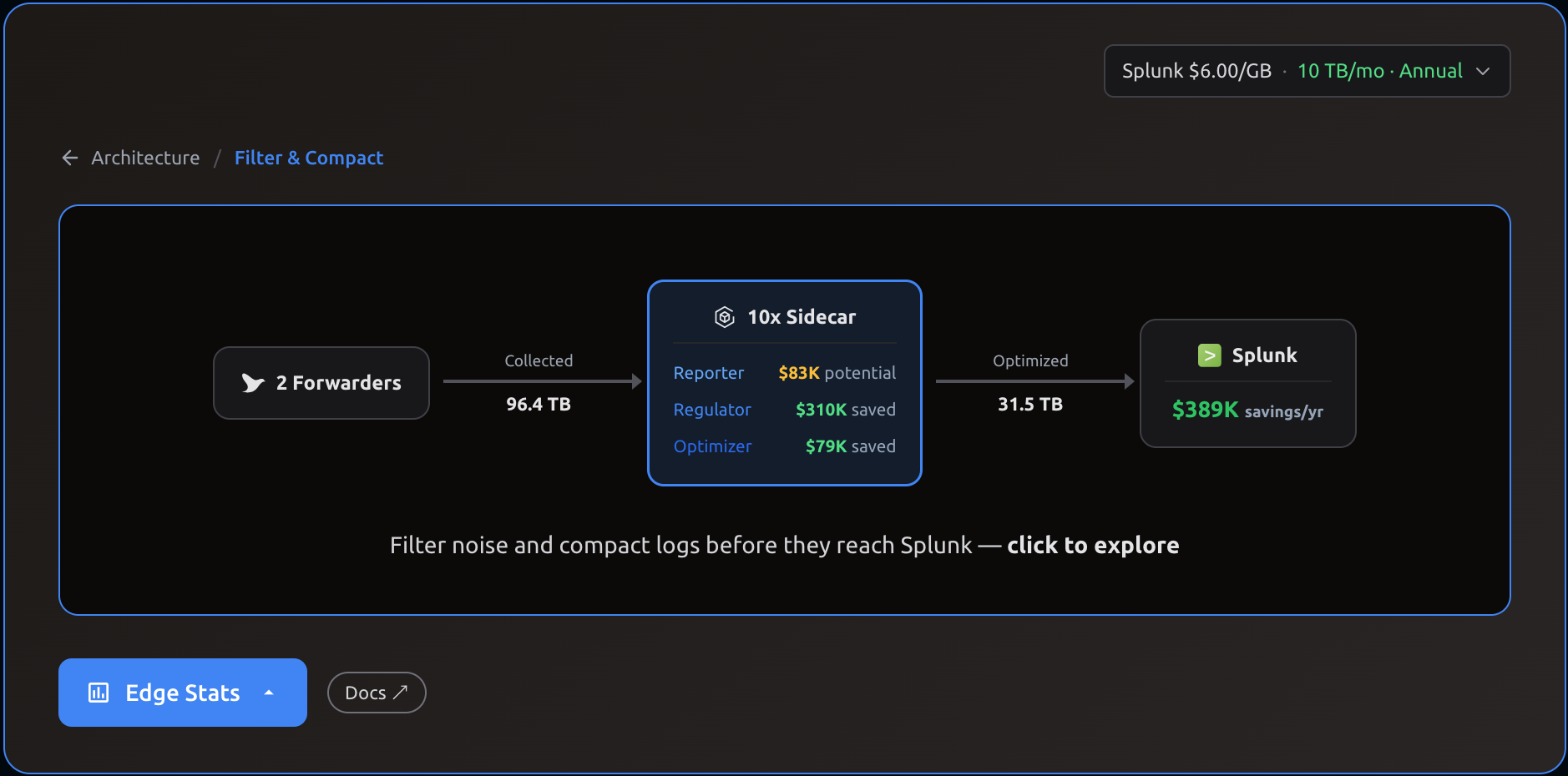
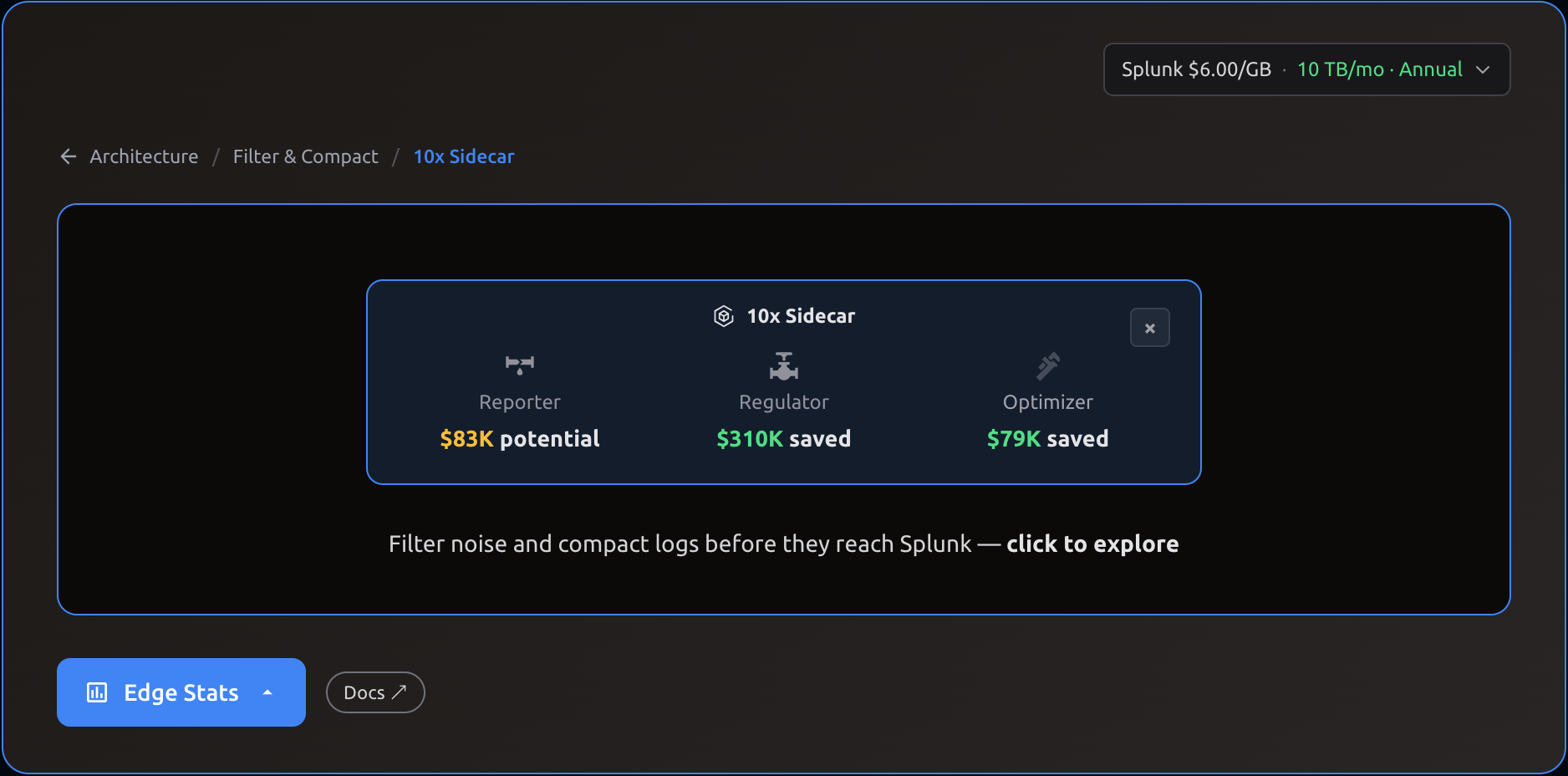
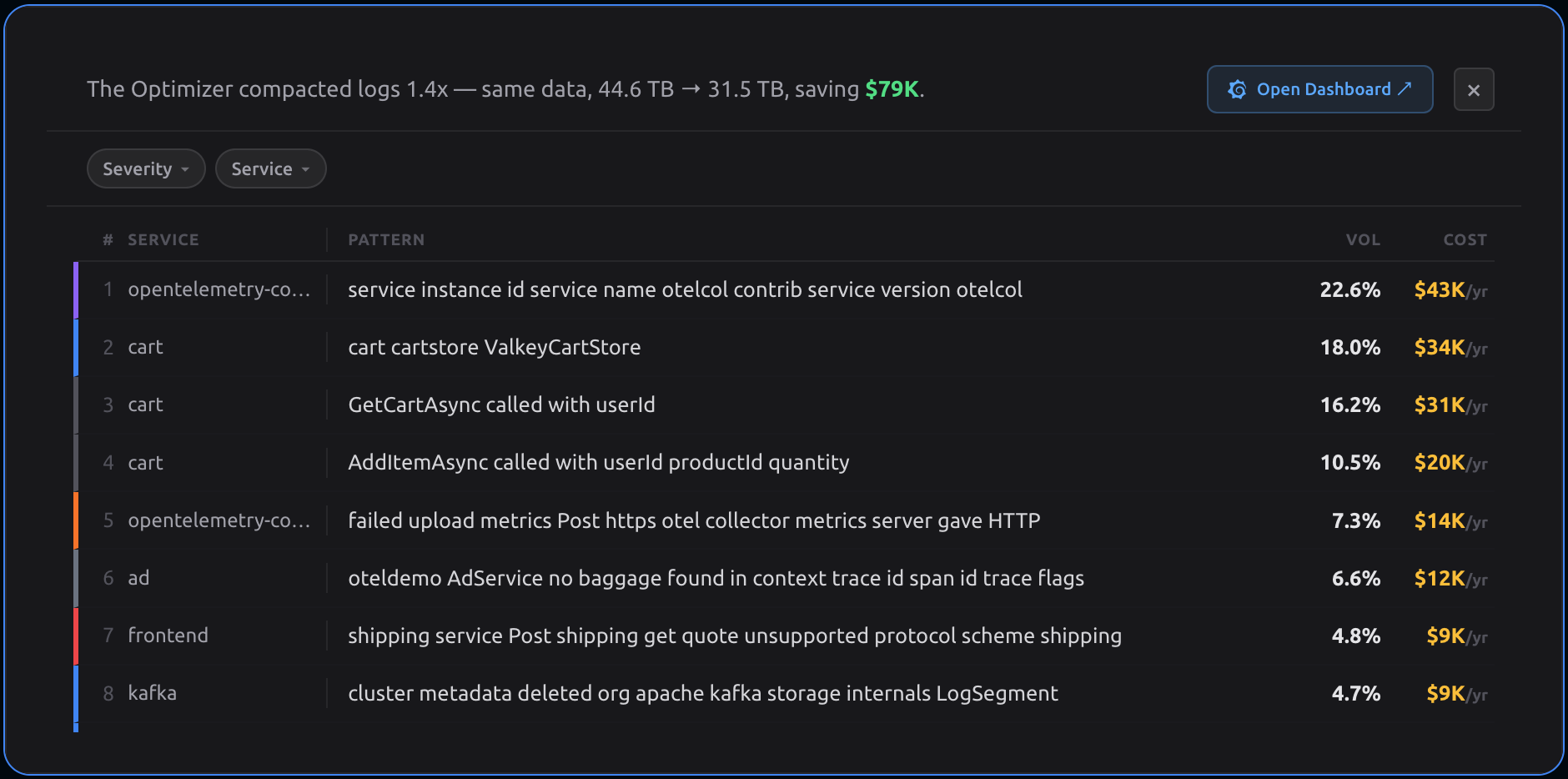
Cut Storage Costs
Reduce storage costs by 50-75% by forwarding compact events to object storage (e.g., AWS S3, Azure Blobs). Expand events on-the-fly using the Retriever app to forward raw data to log analytics and metric outputs periodically or on-demand.
Cut Log Analytics Costs
Reduce ingestion and licensing costs by over 50% by forwarding compact events to Splunk and Elasticsearch. The open-source 10x for Splunk app and L1ES Elasticsearch plugin expand events in real-time, maintaining full querying, dashboard, and alerting capabilities without data loss.
Workflow
Compact mode processes events from a variety of log forwarders, such as Fluentd, Fluent Bit, Filebeat, and Logstash. Configure the app to process all or a subset of the events, allowing for targeted analysis, regulation, and volume reduction.
graph LR
    A["<div style='font-size: 14px;'>🚙 Forwarder</div><div style='font-size: 10px; text-align: center;'>Sidecar Process</div>"] --> B["<div style='font-size: 14px;'>📡 Receive</div><div style='font-size: 10px; text-align: center;'>Stream Events</div>"]
    B --> C["<div style='font-size: 14px;'>🔄 Transform</div><div style='font-size: 10px; text-align: center;'>into TenXObjects</div>"]
    C --> D["<div style='font-size: 14px;'>🎁 Enrich</div><div style='font-size: 10px; text-align: center;'>Add Context</div>"]
    D --> E["<div style='font-size: 14px;'>🗜️ Compact</div><div style='font-size: 10px; text-align: center;'>Encode Events</div>"]
    E --> F["<div style='font-size: 14px;'>📤 Output</div><div style='font-size: 10px; text-align: center;'>Return to Forwarder</div>"]

    classDef deploy fill:#7c3aed88,stroke:#6d28d9,color:#ffffff,stroke-width:2px,rx:8,ry:8
    classDef receive fill:#9333ea88,stroke:#7c3aed,color:#ffffff,stroke-width:2px,rx:8,ry:8
    classDef transform fill:#2563eb88,stroke:#1d4ed8,color:#ffffff,stroke-width:2px,rx:8,ry:8
    classDef enrich fill:#059669,stroke:#047857,color:#ffffff,stroke-width:2px,rx:8,ry:8
    classDef compact fill:#f59e0b,stroke:#d97706,color:#ffffff,stroke-width:2px,rx:8,ry:8
    classDef output fill:#ea580c88,stroke:#c2410c,color:#ffffff,stroke-width:2px,rx:8,ry:8

    class A deploy
    class B receive
    class C transform
    class D enrich
    class E compact
    class F output
🚙 Forwarder: Runs 10x as a sidecar process to log forwarders for real-time event analysis
📡 Receive: Read events continuously from log forwarders via IPC
🔄 Transform: Structure raw events into well-defined TenXObjects
🎁 Enrich: Apply enrichment rules to augment TenXObjects with intelligent context
🚦 Regulate: Filter events via per-node budget sampling or a declarative field-set mute file to prevent over-billing
🗜️ Compact: Losslessly compact events using templates the runtime engine builds from AOT compiler symbols
📤 Output: Return compact events to forwarder to ship to destination analyzers or storage
Architecture
Compact mode executes inside the Reducer sidecar, compacting events before they ship to a log analyzer or object storage.
Forwarders ship verbose events containing repetitive elements such as JSON/KV field names, messages, severity levels and app-specific low-cardinality values, increasing cost by over 50%.
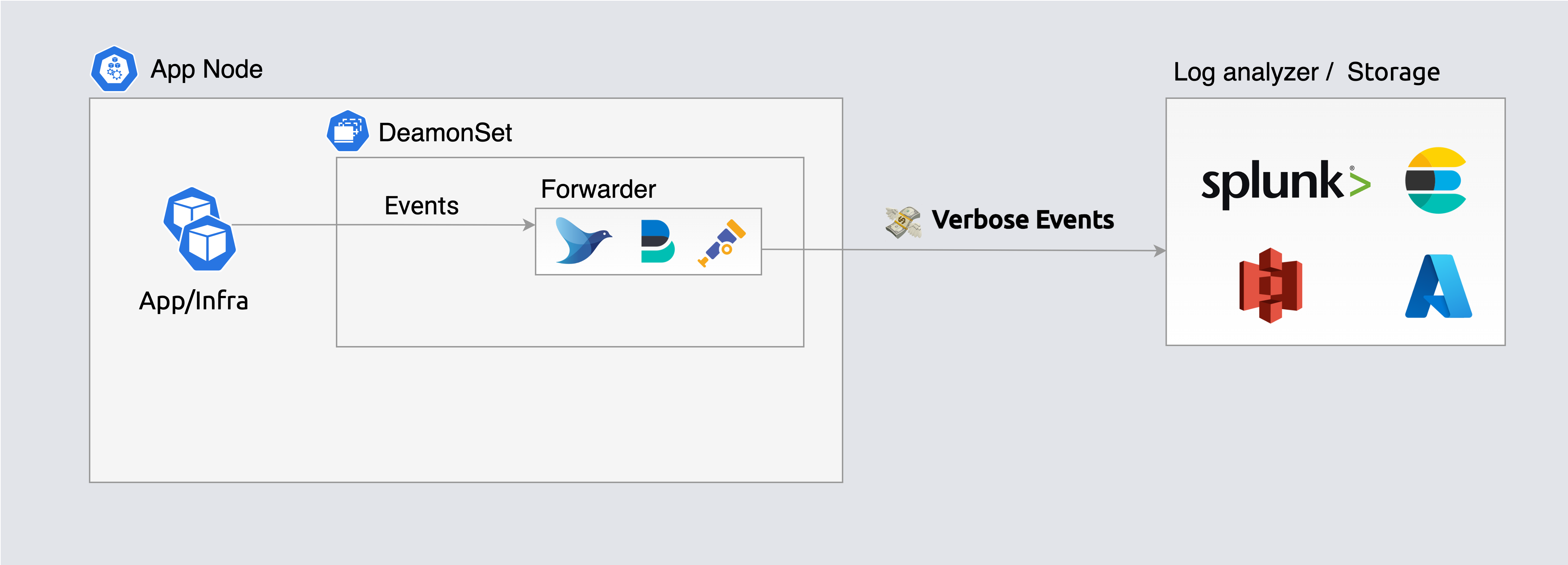
 Forwarders ship costly duplicative events to log analyzers
Forward compact events to low-cost storage (e.g., AWS S3, Azure Blobs). The Retriever app expands and streams selected events to log analyzers and metric outputs.
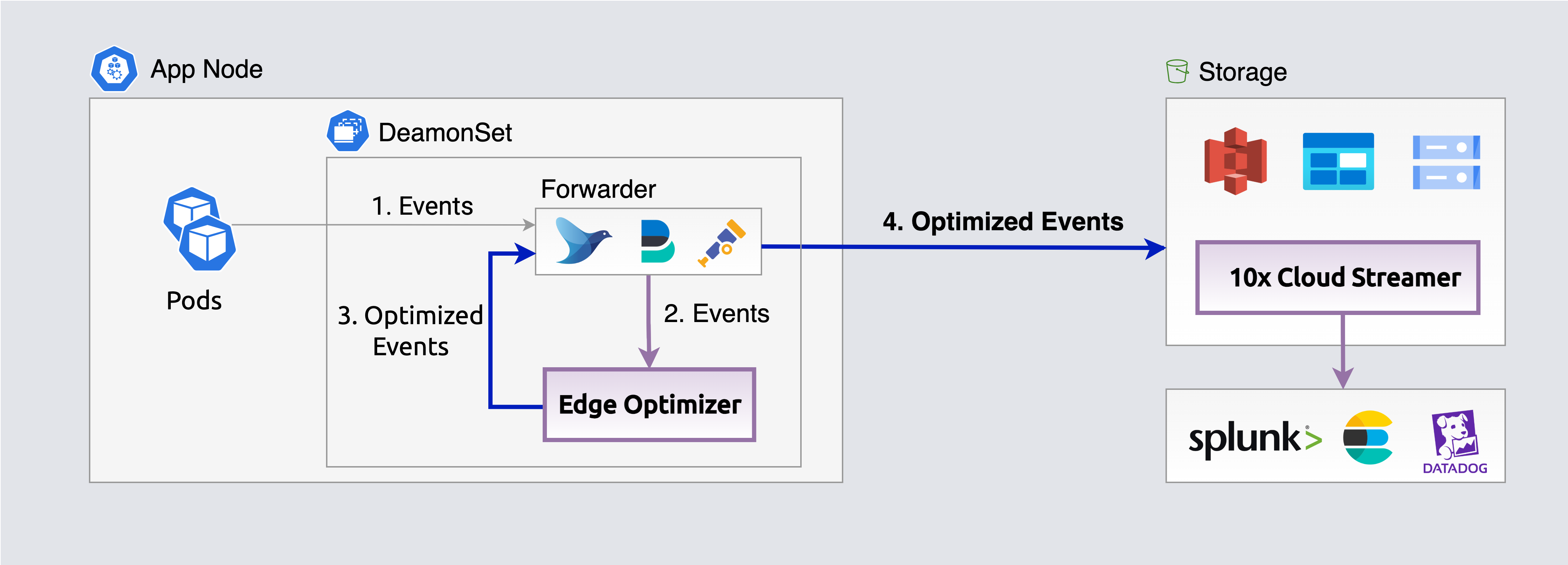
 Compact mode losslessly compacts events before they upload to storage
Forward compact events to Splunk. The open-source 10x for Splunk app expands events on-the-fly at search time, displaying them in full JSON/text form in dashboards and queries.
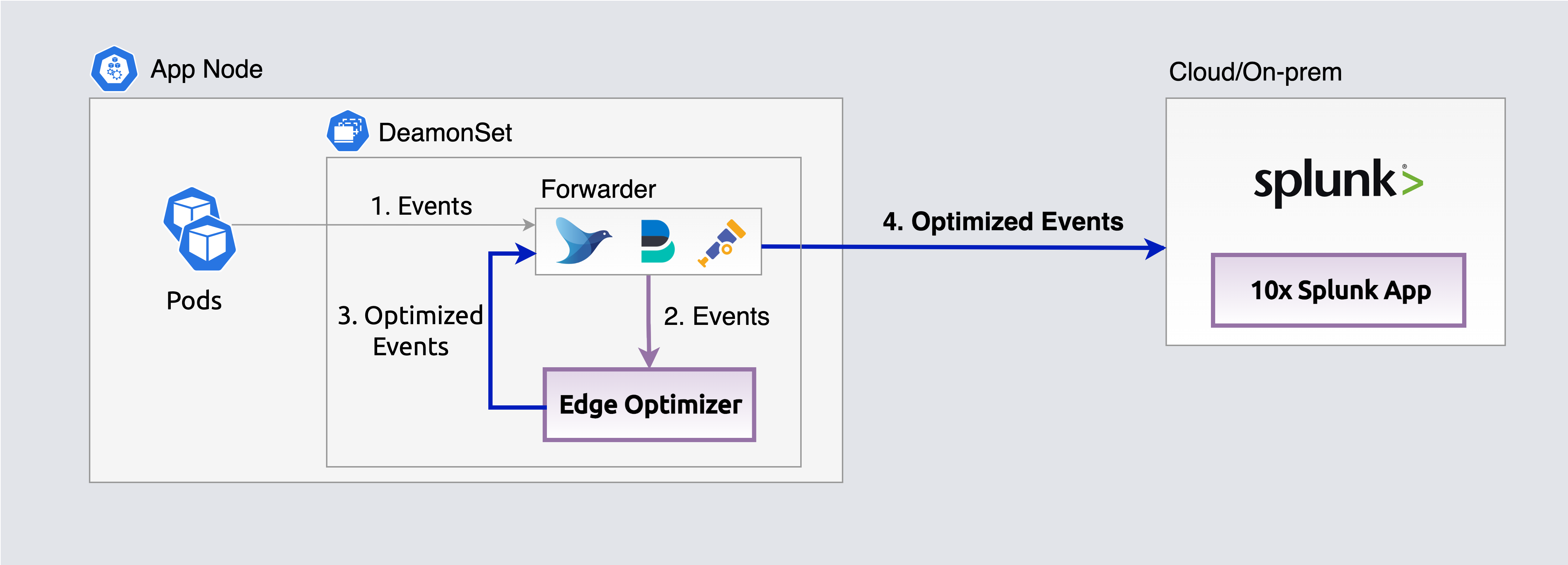 Compact mode losslessly compacts events before they ship to Splunk
Forward compact events to Elasticsearch or OpenSearch. The open-source L1ES plugin transparently rewrites standard queries and decodes _source at search time — Kibana dashboards, saved searches, and alerts work unchanged.
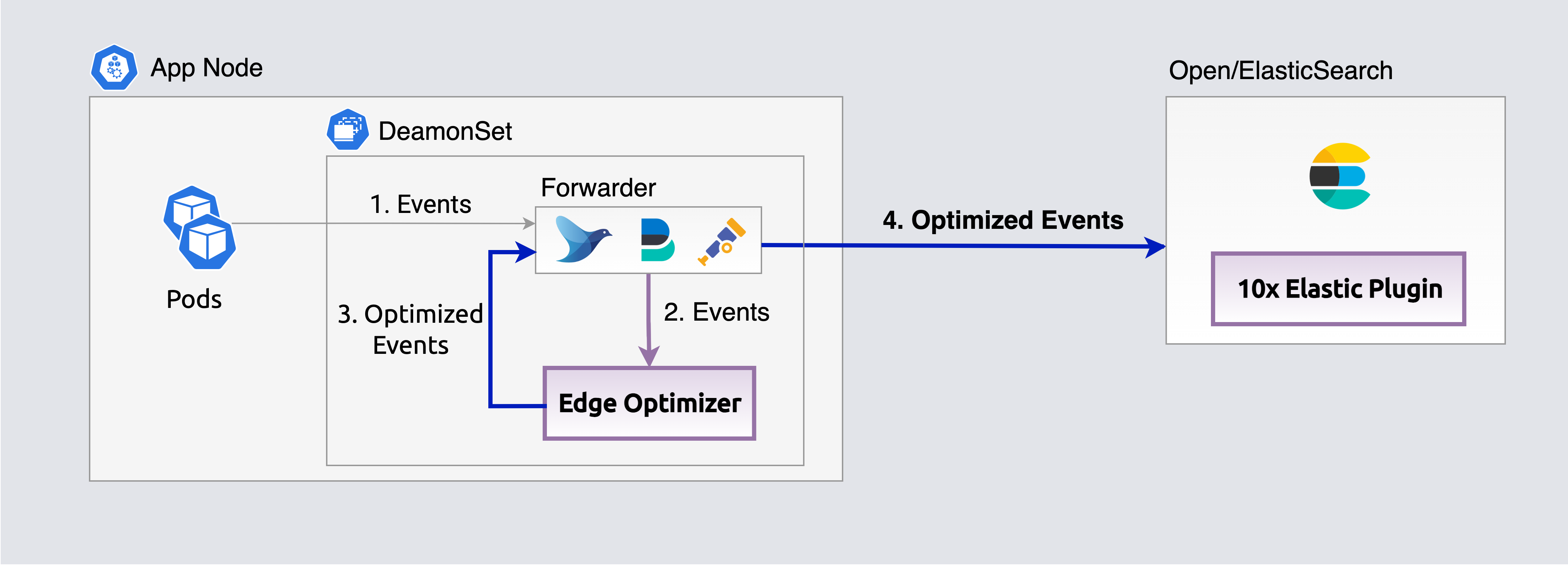 Compact mode losslessly compacts events before they ship to ElasticSearch
Safety & Reliability
Compact mode runs inside the Reducer sidecar with fail-open design — if the reducer crashes or stops, your logs continue flowing normally at full volume to your analyzer.
| Topic | Detail |
|---|---|
| Fail-open design | Logs continue flowing if 10x goes down |
| Backpressure handling | Disk buffering prevents data loss during spikes |
| Resource requirements | 512MB heap + 2 threads handles 100+ GB/day |
| Rollback | helm uninstall takes ~1 minute, no data loss |
See the Reducer FAQ for complete operational details, capacity planning, and deployment guidance.